 English
 Español
 Français
 Português PT
 Italiano
 Deutsch






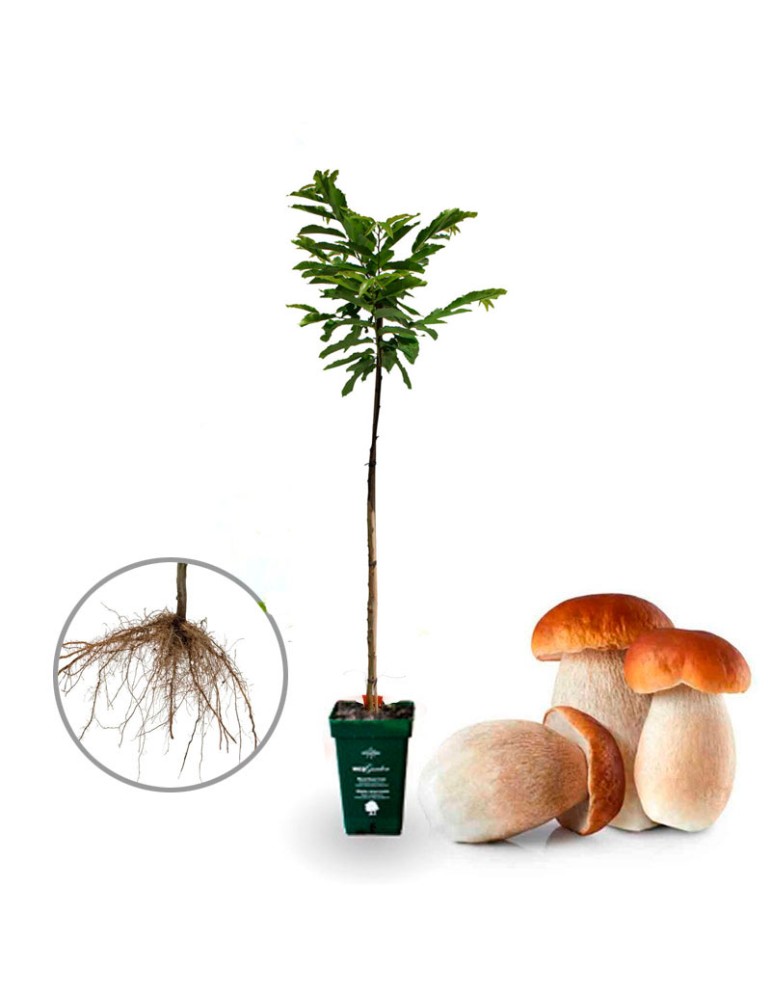


Discover the Mycorrhizal Chestnut with boletus (Castanea sativa), a unique species that combines ornamental beauty with the ability to produce quality wood, chestnuts and edible mushrooms. Ideal for gardens and forests.
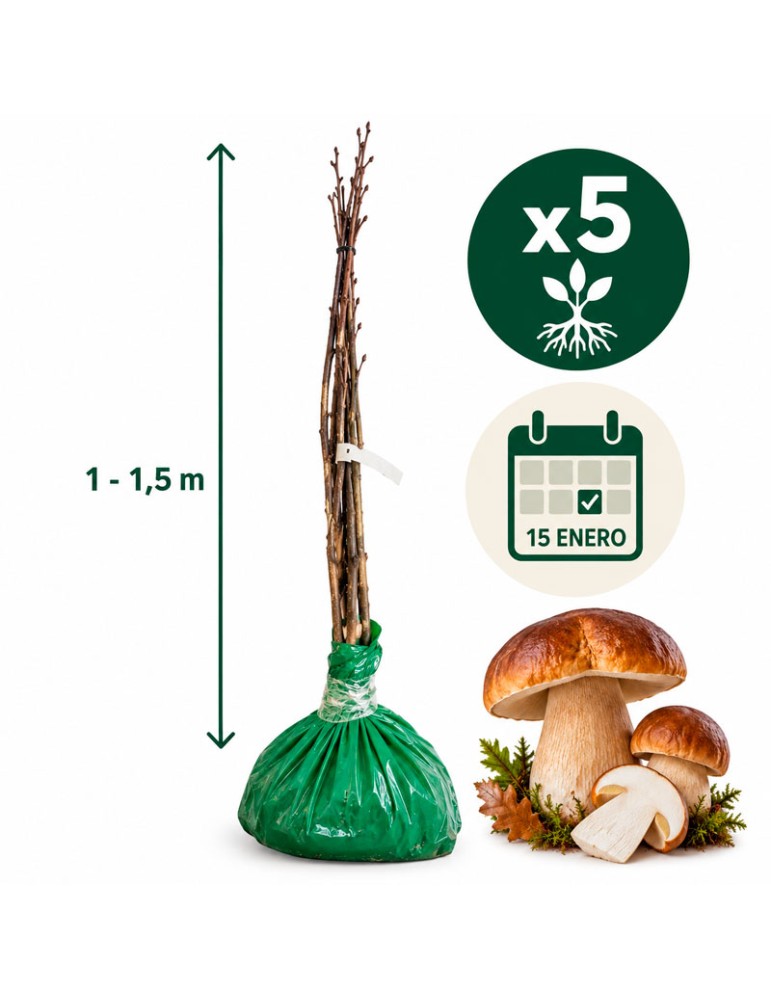
*Available from mid-January. Limited units, make your reservation.
Imagine a tree that not only beautifies your garden with its majestic presence but also gives you one of nature's most precious treasures: chestnuts and boletus mushrooms. The Chestnut tree mycorrhized with boletus is much more than just a tree; it is an investment in beauty, sustainability, and flavor. With its impressive purple foliage and its ability to produce boletus, this tree will transform your space into an oasis of life and abundance.
The Chestnut tree mycorrhized with boletus is not only a visual wonder but also a source of tangible benefits. Its association with the boletus edulis fungus guarantees a natural production of mushrooms, ideal for gastronomy lovers. Furthermore, its wood is of high quality, perfect for carpentry projects or simply for enjoying its shade and freshness in your garden.
This tree not only provides practical benefits but also enriches your emotional life. Its purple foliage changes hue with the seasons, creating a unique visual spectacle that connects you with nature. Every time you see its leaves shine under the sun or enjoy a delicious boletus mushroom, you will feel a deep satisfaction for having chosen such a special species.
The Chestnut tree mycorrhized with boletus stands out for its resilience and adaptability. It grows in a wide variety of soils and climates, even withstanding intense frosts. Its preference for shady areas makes it the perfect choice for those corners of your garden where other species would not thrive. Additionally, its bare-root format makes it easy to
Data sheet