 English
 Español
 Français
 Português PT
 Italiano
 Deutsch






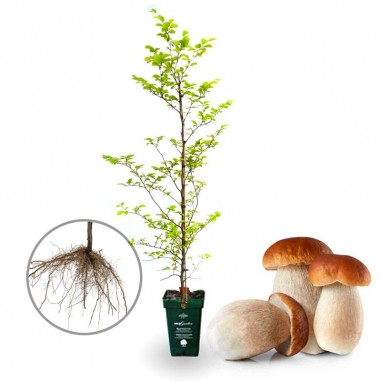
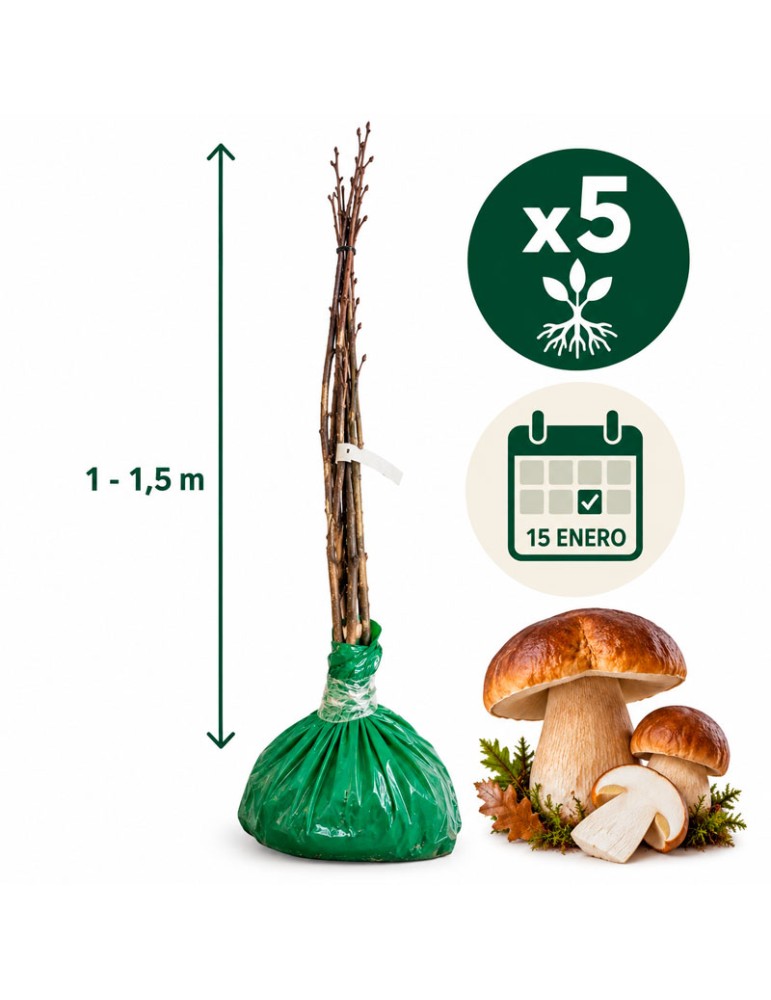
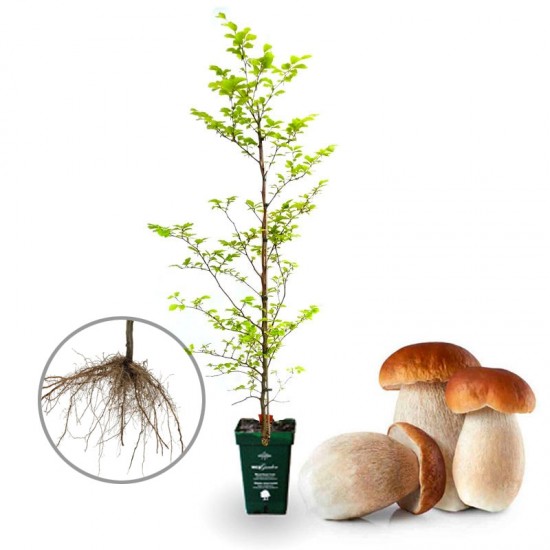


Discover the Haya mycorrhizal with boletus (Fagus sylvatica), a unique species that combines the production of high-quality wood with the ability to generate edible mushrooms. Ideal for forestry and ornamental projects.
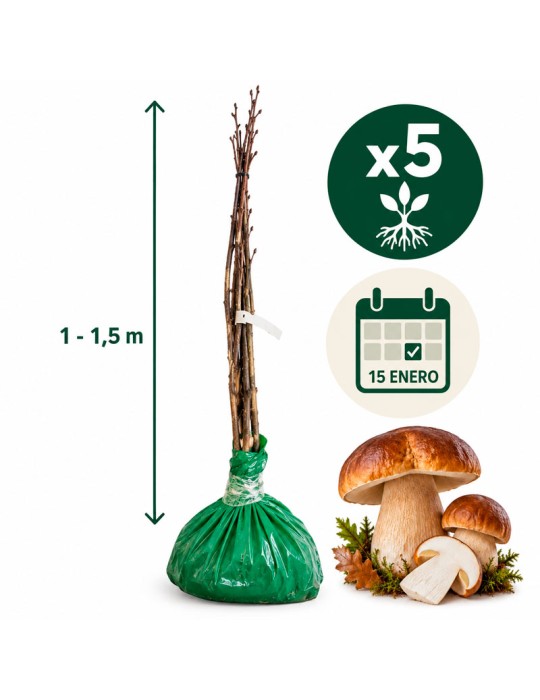
*Available from mid-December. Limited stock – please book now.
Imagine a tree that not only beautifies your environment but also gifts you the most exquisite fruits of nature. The Beech tree mycorrhized with cep is much more than a plant: it's an investment in beauty, sustainability, and flavor. With its ability to produce high-quality mushrooms and top-grade wood, this tree becomes a living treasure that will last for generations. Is it time to give your garden or forest a touch of magic and productivity?
The Beech tree mycorrhized with cep is not only an ornamental tree of impressive beauty but also a source of valuable resources. Starting from the 8th-10th year, you'll begin to enjoy a mushroom production that can reach up to 80 kg per hectare per year. Additionally, its wood, appreciated in carpentry and cabinet making, is synonymous with quality and durability. This tree is a gift to the environment and to your palate.
But its benefits go beyond the tangible. Planting a Beech tree mycorrhized with cep is an act of connection with nature. Watching this tree grow, with its majestic height of up to 40 meters and its longevity of up to 700 years, will fill you with pride and satisfaction. It's an experience that transcends the material, adding a unique emotional value to your life.
Moreover, this tree stands out for its versatility and adaptability. It requires well-drained soils and a pH above 5, but with proper care, it becomes an indispensable element in any environment. Its planting frame of 6-7 meters ensures optimal growth, both for mushroom production and for wood. It's a smart choice for those who seek to combine aesthetics and functionality.
Don't miss the opportunity to have in your hands a tree that has it all: beauty, productivity, and a legacy that will endure centuries. The Beech tree mycorrhized with cep is a choice that will transform your environment and provide you with unique satisfactions. Act now and get hold of this natural treasure before it runs out! Plant today and reap the benefits tomorrow.
Data sheet