Amanita phalloides: the killer fungus
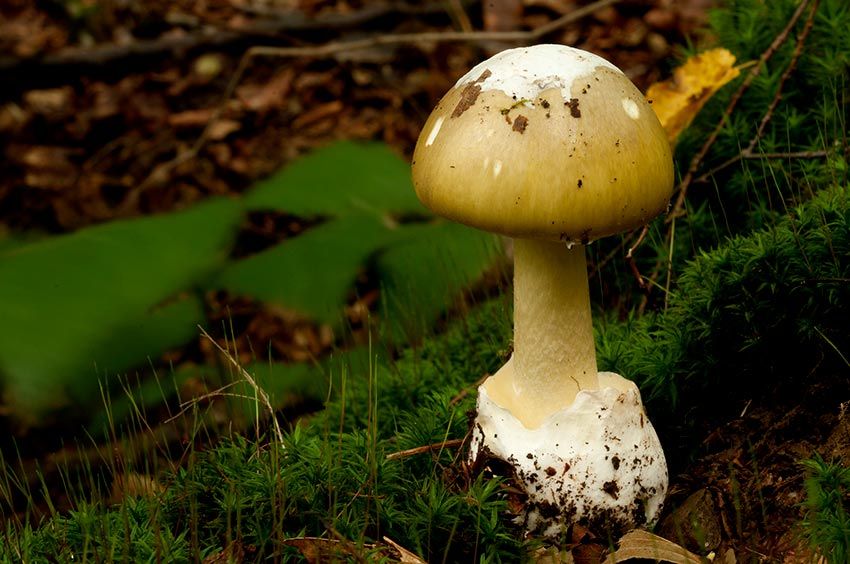
- Amanita phalloides ¡Alerta con la cigüe verde!
- Amanita phalloides, green hemlock, farinera borda... All the names of this deadly mushroom
- How to distinguish Amanita phalloides
- What is the habitat of the Amanita phalloides, green amanita?
- When can we find Amanita phalloides in the forest?
- Poisoning by Amanita phalloides
- Mushrooms similar to Amanita phalloides. Beware of confusion
- Photographs of Amanita phalloides
Amanita phalloides ¡Alerta con la cigüe verde!
The amanita phalloides is the poisonous mushroom that causes the most cases of poisoning each season. Its resemblance to other edible mushrooms and the fact that it grows throughout our region mean that every year we hear of serious cases of mushroom poisoning. Here we reveal the secrets and characteristics of this deadly mushroom.
We would like to point out that confusion with this poisonous mushroom is extremely dangerous and can cause death. Therefore, if you find a death cap mushroom in the mountains, it is best not to touch it.
All mushrooms fulfill their function in the mountains, as we have already mentioned in this article. But if, for whatever reason, you want to collect them to study them at home, you must separate them from the rest of the edible mushrooms.
Be careful when picking hemlock mushrooms; do not mix them with other mushrooms
To do this, you can keep the mushroom in a piece of aluminum foil or a paper envelope. Be very careful not to leave them in the wicker basket with the rest of the mushrooms, as even a small piece that slips in can cause harm.
In our shop, we have baskets with several compartments, specifically designed to separate different species of mushrooms.
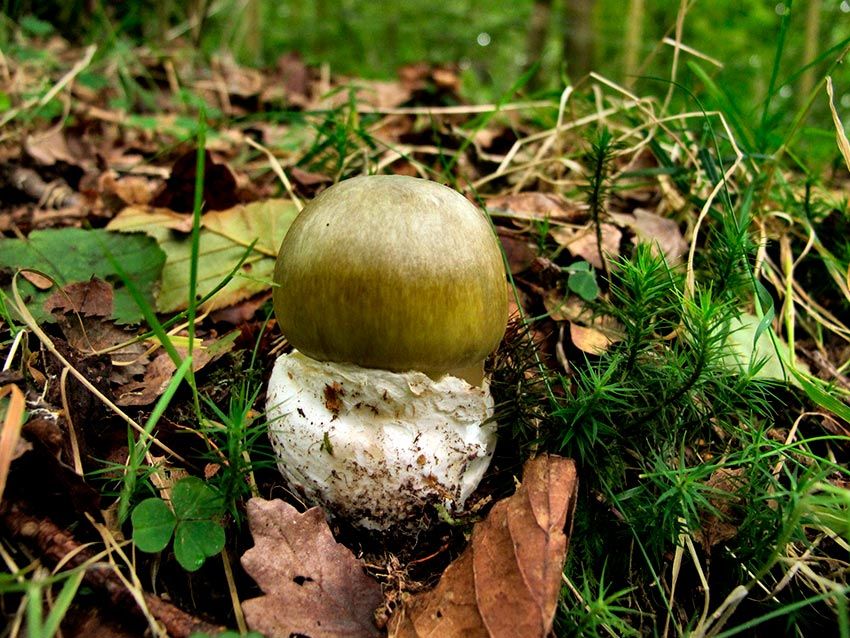
Amanita phalloides, green hemlock, farinera borda... All the names of this deadly mushroom
This mycological species is widely known in all areas where it appears. And with good reason! The green hemlock has caused numerous cases of poisoning over the years. We will explain the main names by which it is known.
Its scientific name is Amanita phalloides. It belongs to the Amanitaceae family, subclass Agaricomycetes, order Agaricales, class Basidiomycotina. But not all enthusiasts know it by this name. The names in Spanish are varied: green amanita, hemlock, green hemlock, deadly amanita, dog killer, devil's mushroom... In Catalan, it is known as farinera borda or farinot, in Basque hilkorra or hiltzaile berde.
In other European countries, it is known as Death cap (UK), amanite phalloïde or ronge verte (France), Kavalakärpässieni (Finland)
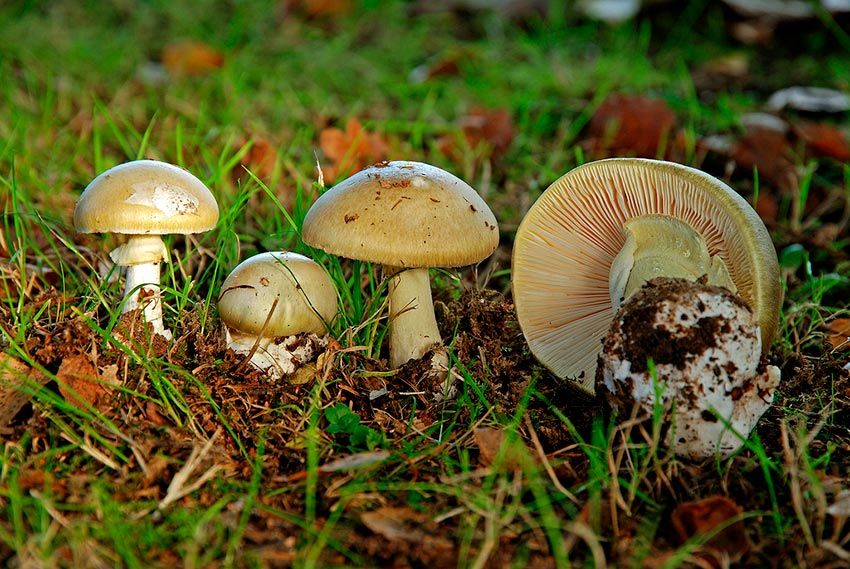
How to distinguish Amanita phalloides
Its sweet, white flesh and pleasant aroma conceal a dangerous trap. At La Casa de las Setas, we will never tire of warning that you should never rely on the smell or appearance of a mushroom to determine whether it is edible or not. Warning! Confusion can lead to liver transplantation at the very least.
What shape are Amanita phalloides?
We will describe the different parts of the green mushroom so that you can clearly identify it and avoid making dangerous mistakes.
Cap of the phalloides mushroom
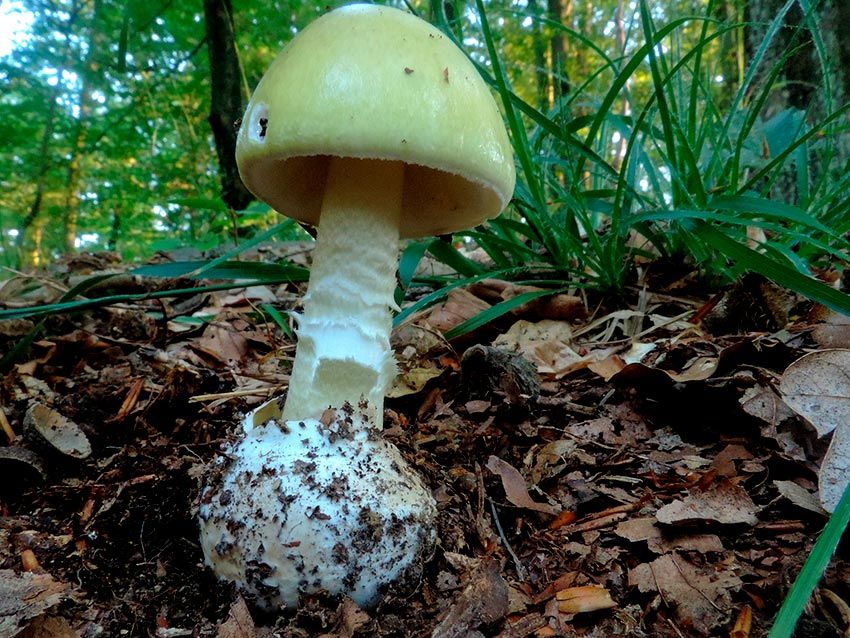
Diameter between 5 and 15 cm. In young specimens, it has a convex or subglobular shape and evolves into a flat shape when mature. The tones of the hemlock are greenish-yellow, darkening slightly in the center. Its cuticle separates easily.
Gills
The death cap has pure white, broad, uneven, free, and tightly packed gills.
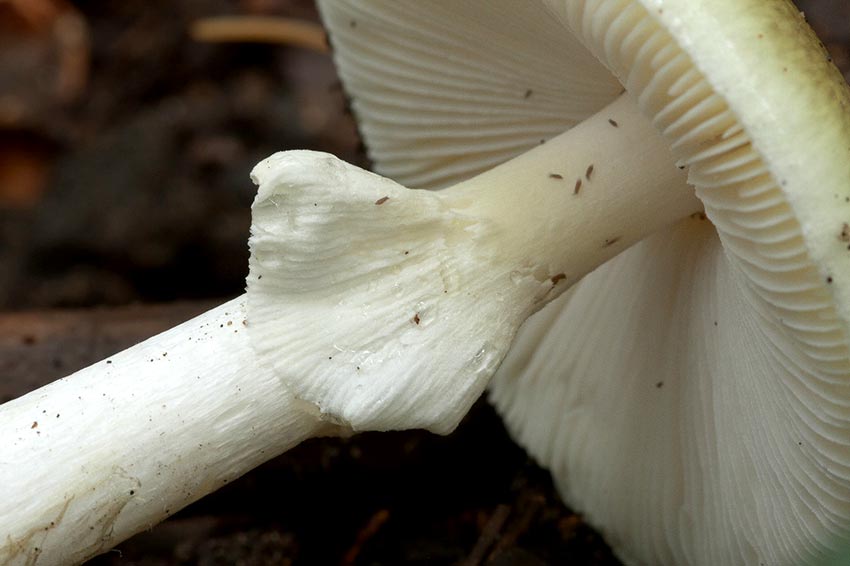
Stem
The stem of Amanita phalloides is usually between 6 and 15 cm long and between 1 and 2 cm in diameter. It is cylindrical and gradually widens towards its base, ending in an egg-shaped bulb. It is white in color, with small olive-colored fibers arranged in a zigzag pattern visible on its surface. It has a white, membranous, persistent ring that hangs down like a skirt. The ring has striations in its upper zone.
Ample, membranous volva, white in color, sac-shaped (sacciform), adherent in the lower part and free in the upper part.
Flesh
White in color, spongy in the bulb. Pleasant smell.
What is the habitat of the Amanita phalloides, green amanita?
This species of Amanita is quite abundant and common. Mycorrhiza with trees of the genus Quercus. Thus, it can mainly be found in forests of cork oak, oak, holm oak, beech, and chestnut trees. More rarely, it can also be found in conifers.
Prefers acidic soils.
When can we find Amanita phalloides in the forest?
The Amanita phalloides is an autumn species, although it is not uncommon to see them appear from late summer until the end of November. The Amanita phalloides does not like the cold, so it is not usual to see it after December.
Poisoning by Amanita phalloides
Given the dangerous nature of this species, we must be able to recognize it with certainty. The poisoning it causes in the body has a long latency period, so that when the first symptoms appear between 6 and 48 hours after consumption, the damage caused to vital organs is almost irreversible.
Amanita phalloides is responsible for the vast majority of mushroom poisoning cases, accounting for around 90% of all cases.
How it acts in our body
The potency of the toxin in A. phalloides is such that ingesting 25 to 30 grams of this mushroom (equivalent to half a specimen) can cause death in an adult. But the long latency period of this toxic substance in our bodies makes it even more dangerous. Symptoms begin to appear between 6 and 48 hours after ingestion. This long incubation period means that the symptoms are not usually linked to the ingestion of the mushrooms.
The first symptoms are similar to colic, with diarrhea, vomiting, and stomach pain. Two or three days later, these symptoms seem to disappear, but rapid liver deterioration, bloody diarrhea, convulsions, coma, and death follow.
In recent years, medical advances have reduced the mortality rate from Amanita phalloides poisoning from 75% to 15%, with a better prognosis if hospitalization occurs quickly. Despite this encouraging data, the green death cap leaves serious sequelae in those poisoned, and in a high percentage of cases, a liver transplant is necessary.
Mushrooms similar to Amanita phalloides. Beware of confusion
Most cases of confusion with hemlock mushrooms are due to misidentification of the mushrooms. This is especially true if the cap of the phalloides is light in color. A quick inspection will allow us to verify that the gills are pink and do not have a volva.
In specimens with a greenish tone, confusion with Russula virescens is possible, although the latter has neither a volva nor a ring.
The knight's mushroom or tricholoma equestre sometimes has greenish tones, making it another species with which we could confuse it. In this case, the same thing would happen. The knight mushroom has no ring or volva.
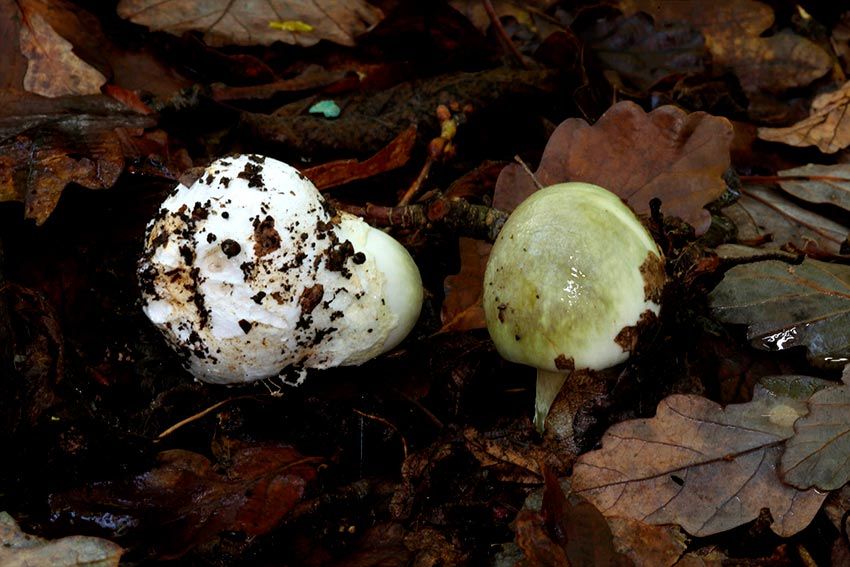
In its “egg” stage, it is very easy to confuse it with king's egg, Amanita caesarea, as both species emerge from a white egg and it is only by cutting the egg in half that we can see the difference
How to distinguish Amanita phalloides
Here are some tips to ensure that you have correctly identified Amanita phalloides. With this deadly species, we must be 100% sure.
- The presence of a volva is very characteristic. The Amanita phalloides grows in an egg and, as it matures, emerges outside. When harvesting, it must be extracted completely in order to be enjoyed.
- The colors of its cap range from pure white in its alba variety to dark green.
- It appears in almost all habitats, so don't let your guard down when you go to the mountains
Photographs of Amanita phalloides
Although it is extremely poisonous, it is a very beautiful mushroom. The images of A. phalloides are also very helpful in differentiating and identifying the green amanita from other mushrooms.
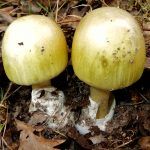
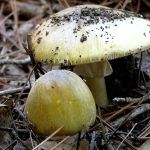
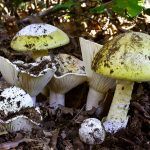
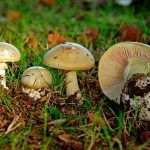
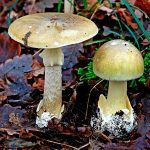
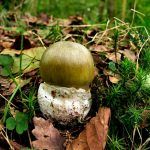
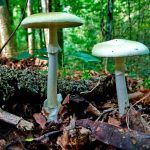
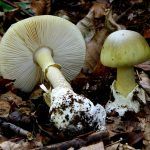
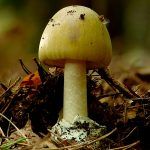
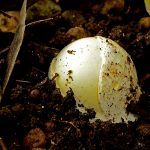
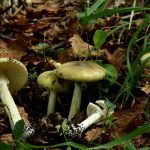
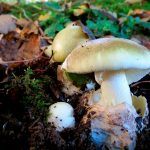
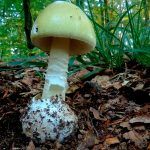
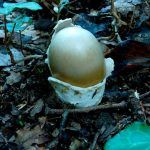
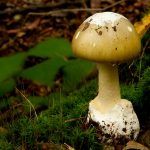
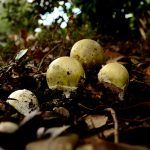
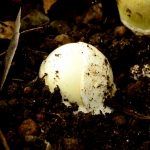
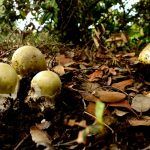
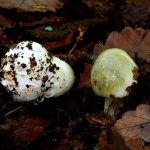
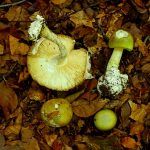
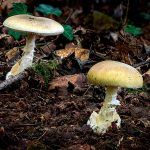
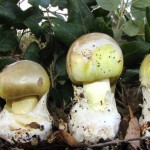
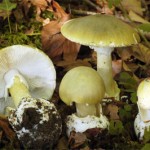
You've probably had an experience with this dangerous mushroom. Would you like to share it with us? Send us your message to our Facebook page and we will publish it in the next revision of this article.
Health and mushrooms! … but make them edible: -)
Te pueden interesar